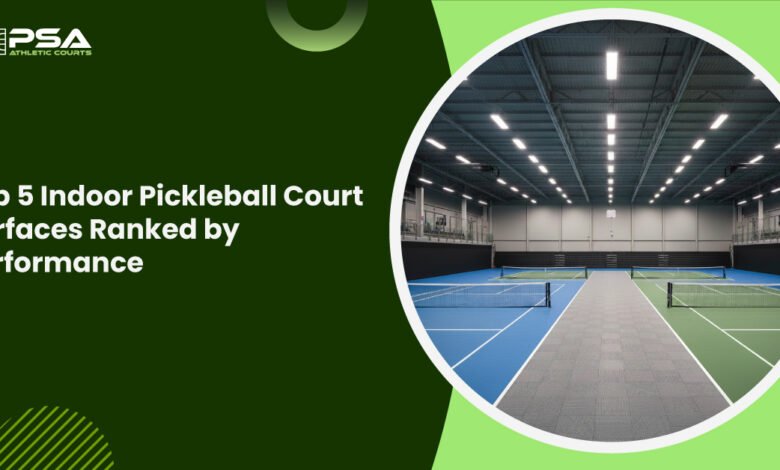
Pickleball has exploded in popularity, and with indoor facilities growing rapidly across the U.S., choosing the right indoor pickleball court surface has become more important than ever. The surface you select impacts player safety, ball bounce, noise levels, durability, and overall playing experience.
If you’re building or upgrading an indoor facility, understanding the best flooring types and how they compare is essential.
Here’s a ranked breakdown of the top 5 indoor pickleball court surfaces based on performance, safety, maintenance, and cost-effectiveness.
1. Cushioned Acrylic Flooring (Best Overall Performance)
Best for: Competitive play, community centers, sports complexes
Cushioned acrylic surfaces deliver the perfect balance of grip, speed, shock absorption, and durability. They’re commonly used in indoor tennis and multi-sport courts due to their comfort and pro-level bounce.
Why does it rank #1
- Excellent traction
- Reduced joint impact (player favorite)
- Highly consistent ball bounce
- Works for pickleball, tennis, volleyball & more
Pine State Courts often recommends cushioned acrylic for indoor facilities looking for high-performance flooring that remains durable for years with minimal resurfacing.
2. Polyurethane Flooring
Best for: High-traffic gyms, multi-use courts
Polyurethane is seamless, soft underfoot, and provides reliable traction. It’s known for its shock absorption and durability, making it ideal for mixed-use spaces.
Pros:
- Seamless installation
- Great for multi-sport use
- Long-lasting resilience
Cons:
- More expensive than standard acrylic
- Requires professional installation
3. Modular Tiles
Best for: Fast installation, budget-friendly facilities
Modular tiles interlock and can be installed over many subfloors. They offer a good bounce response, easy maintenance, and the flexibility to replace individual tiles.
Pros:
- Quick installation
- Moisture-resistant
- Repairs are inexpensive
Cons:
- Slightly louder during play
- Bounce can be less consistent than acrylic
Perfect for facilities testing pickleball demand before investing in premium surfacing.
4. Vinyl Flooring
Best for: Multipurpose commercial facilities
Vinyl offers consistent ball bounce and moderate shock absorption. It’s ideal for facilities where pickleball is one of several sports played weekly.
Pros:
- Cost-effective
- Smooth, clean look
- Quick maintenance
Cons:
- Not as cushioned as acrylic or polyurethane
- Can feel slippery without proper texturing
5. Hardwood Court Flooring
Best for: Basketball-first facilities offering indoor pickleball
Hardwood can work well for pickleball when the lines are properly marked and the surface is kept clean.
Pros:
- Fast play
- Looks premium
- Works for many indoor sports
Cons:
- Less forgiving on joints
- Requires frequent recoating
- Not ideal for beginner players
Where Pickleball Court Resurfacing Comes In
Even indoor courts need maintenance over time.
Surfaces wear down, traction reduces, and ball bounce becomes inconsistent.
This is where pickleball court resurfacing becomes essential. The right resurfacing system restores grip, color, and performance especially for acrylic and modular tile courts.
Pine State Courts specializes in resurfacing indoor sports floors, ensuring the surface performs like new without requiring a full replacement.
Final Recommendation
If you’re building an indoor pickleball court or upgrading an existing space, cushioned acrylic is the top choice for long-term performance and player satisfaction.
For facilities in Maine, Pine State Courts offers complete indoor pickleball flooring solutions from design to installation to resurfacing.